The most profound statement made by the Halcyon Great Eight Series is its deliberate rejection of the electric powertrain in favour of a remastered internal combustion engine. While Halcyon’s sister company, Evice, has successfully developed a proprietary 800-volt electric architecture capable of delivering 500 horsepower and a 250-mile range for heritage vehicles, the Great Eight Series returns to a mechanical heart.
Origins of the 6.75
The Rolls-Royce–Bentley L-Series V8 is a long-running and influential engine in British automotive engineering. It holds the distinction of being the longest-running production V8, serving across various Rolls-Royce and Bentley platforms for an astonishing six decades. Its origins trace back to the early 1950s, conceived out of strict necessity to replace the ageing 4.9-litre inline six-cylinder “F-head” engine, which was becoming less competitive against the increasingly powerful V8 engines emerging from American luxury car manufacturers.
The task of developing this new power plant was overseen by Harry Grylls, the Chief Engineer of cars at the Crewe factory, alongside Jack Phillips, the Head of Engine Design, and Charles Jenner. The engineering parameters set by Grylls were exceptionally stringent and seemingly contradictory: the new unit had to provide a massive 50% increase in both power and torque over its predecessor, weigh absolutely no more than the outgoing heavy iron inline-six, fit within the exact same radiator frontal area to preserve the brand’s iconic styling, and cost no more to produce.
To achieve these parameters, the design team opted for a 90-degree V8 configuration. Advanced metallurgy was heavily employed to meet the strict weight targets; both the engine block and the cylinder heads were cast from high-silicon LM8 aluminium. A defining characteristic of the L-Series was its utilisation of wet cylinder liners, which were advanced for the time. Furthermore, the engine eventually utilised hydraulic tappets to ensure whisper-quiet valve operation. Because domestic manufacturing capabilities for these specific parts were lacking in the UK at the time, Phillips initially sourced them from Chicago Screw in America before Rolls-Royce established its own dedicated production facility.
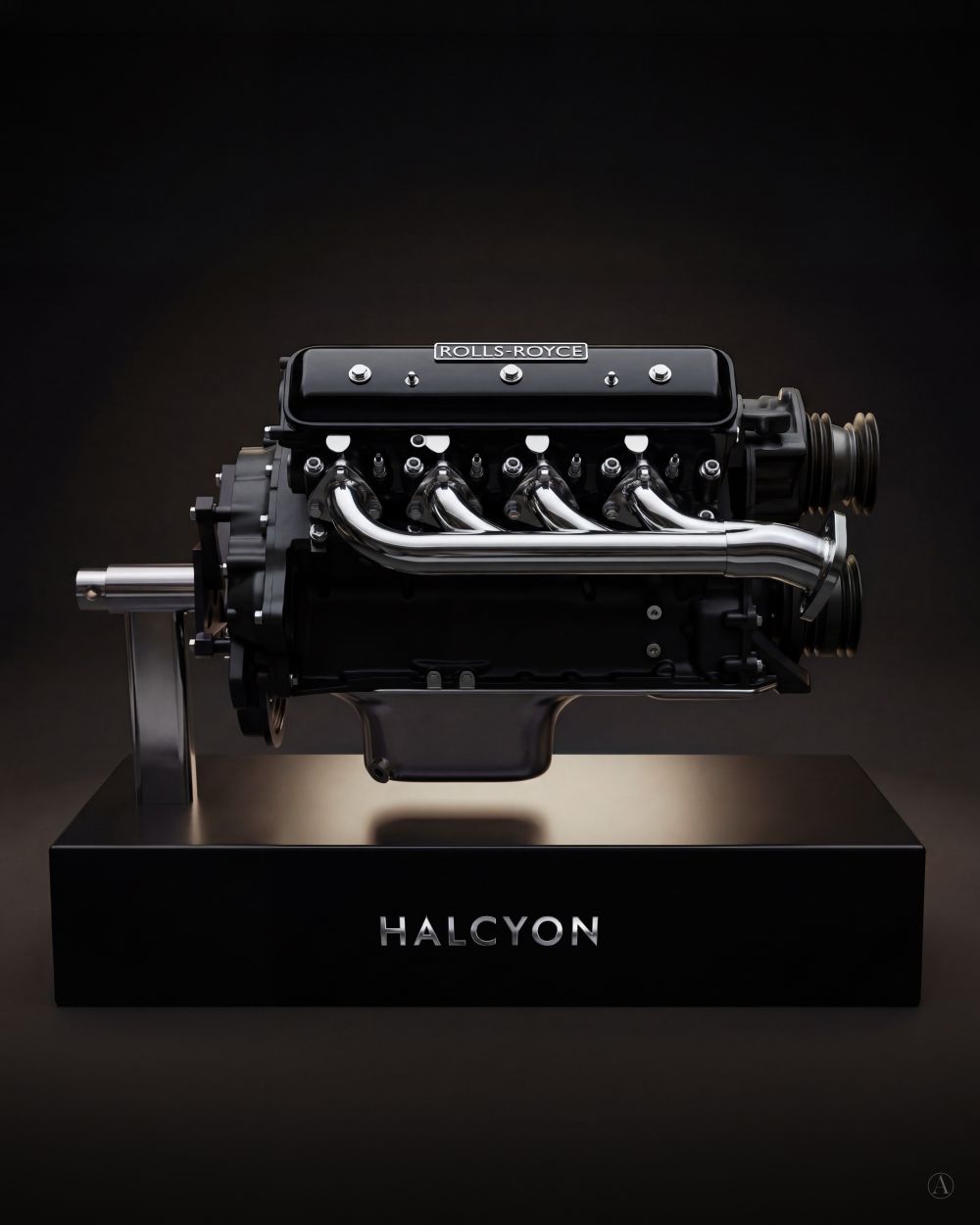
The initial experimental iterations of the engine, designated L380, displaced 5.2 litres. However, by the time the engine made its official production debut in 1959—powering the much-anticipated Rolls-Royce Silver Cloud II and the Bentley S2—the bore and stroke had been significantly increased to yield a capacity of 6.23 litres, officially designated as the L410. It was not until 1971, coinciding with the launch of the Corniche nameplate, that the stroke was increased further, creating the legendary “Six and Three-Quarter” (6.75-litre) displacement that would come to define the soul of the engine for the next half-century.
In 2020, the mighty L-Series 6.75L V8 finally reached the end of its illustrious production life, bowing out in turbocharged form with a strictly limited 30-unit commemorative run installed in the Bentley Mulsanne 6.75 Edition.
Halcyon reports increased torque and a broader power band from their N/A unit, while preserving the engine’s original character: effortless composure, its almost silent idle, and its deep, unrelenting mechanical reserve.
The Genesis of Mulliner Park Ward
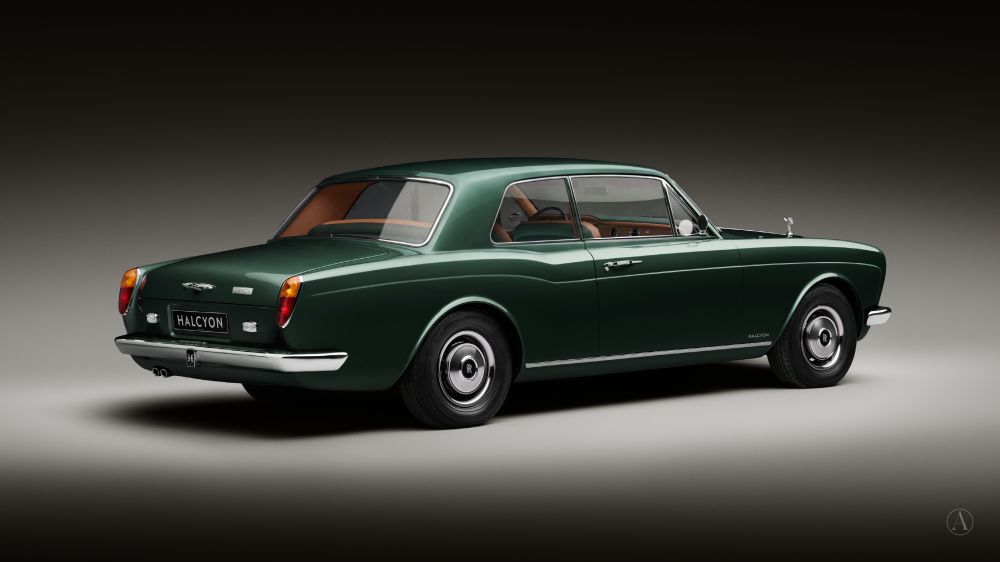
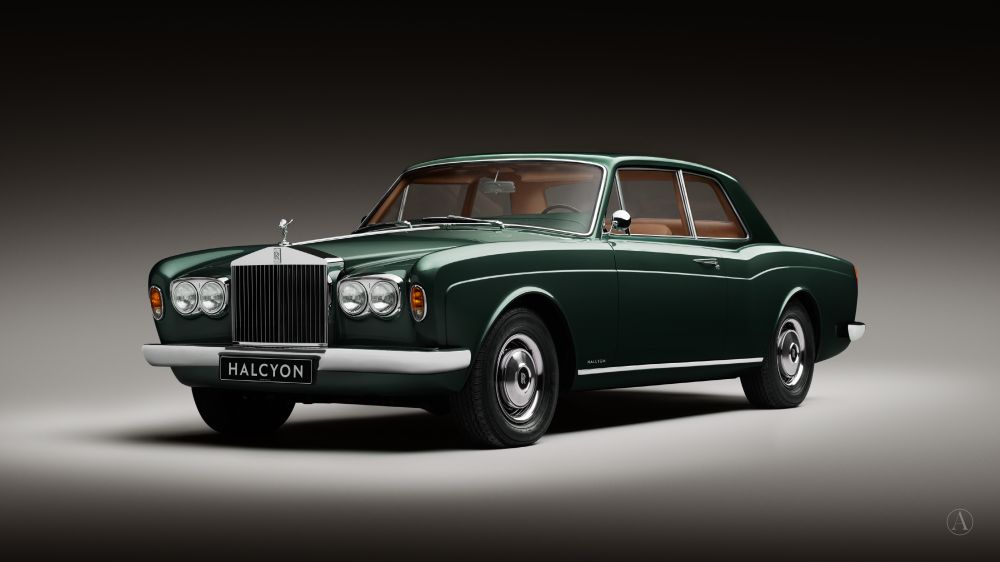
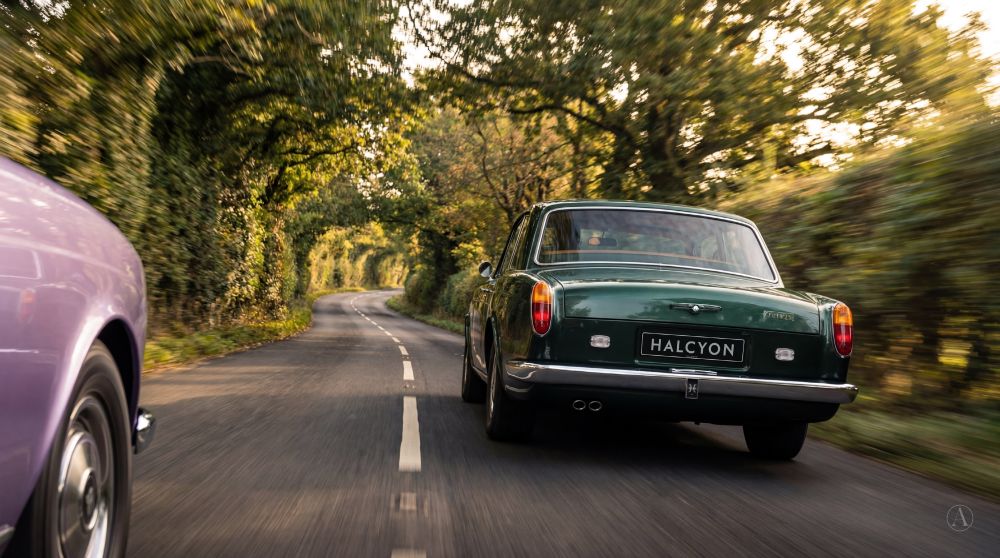
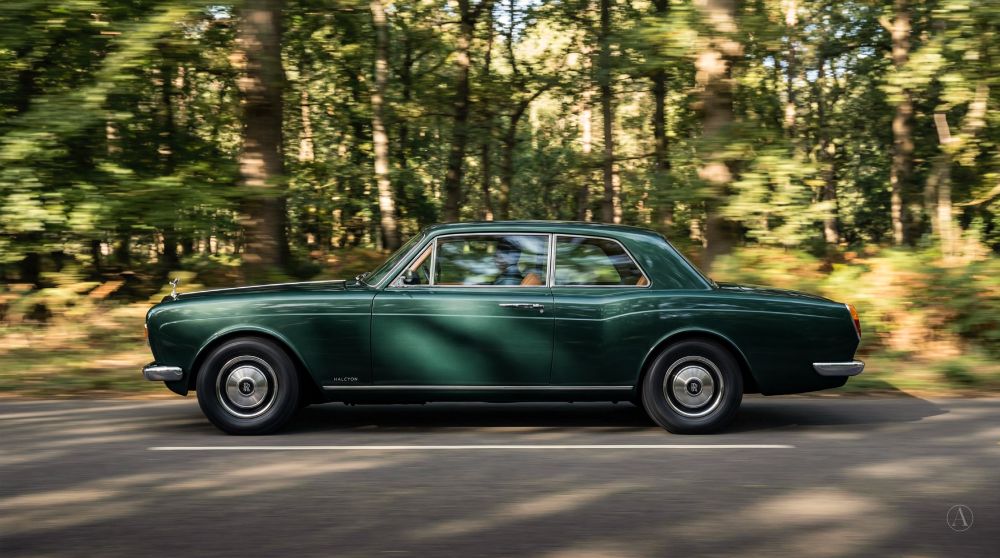
The Corniche represents the culmination of artisanal expertise from Mulliner Park Ward, a prestigious coachbuilder formed in 1961 when Rolls-Royce strategically merged two of its wholly-owned and highly respected subsidiaries: Park Ward of Willesden (which had been acquired by Rolls-Royce in 1939) and H.J. Mulliner & Co. of Chiswick (acquired in 1959). Styling of the exterior remains sympathetic to the original during the bare-metal restoration but with quality improvements throughout: panel gaps are checked, deeper modern metallic paint applied, uninterrupted hand-formed chrome bumpers attached, and modern lighting installed.
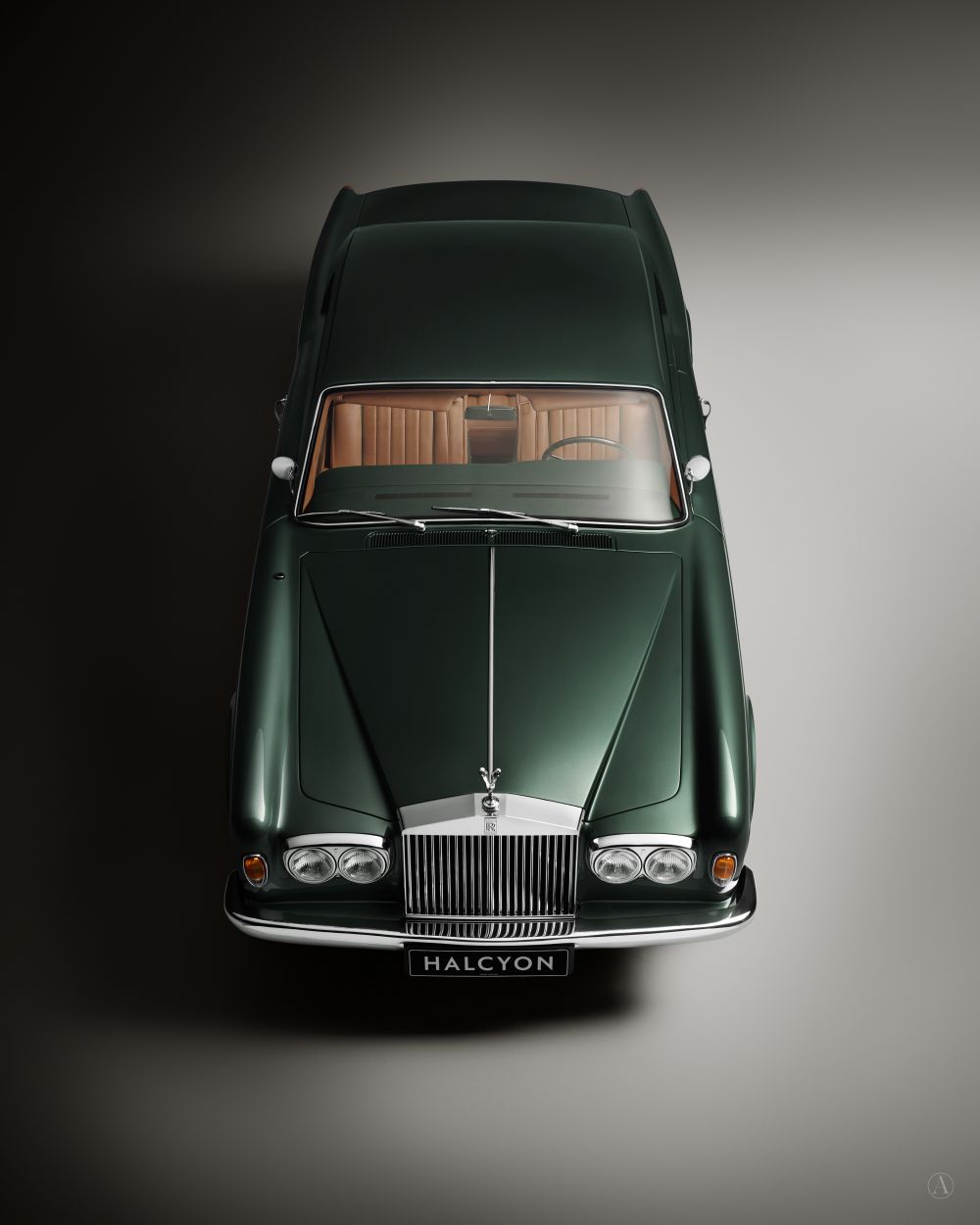
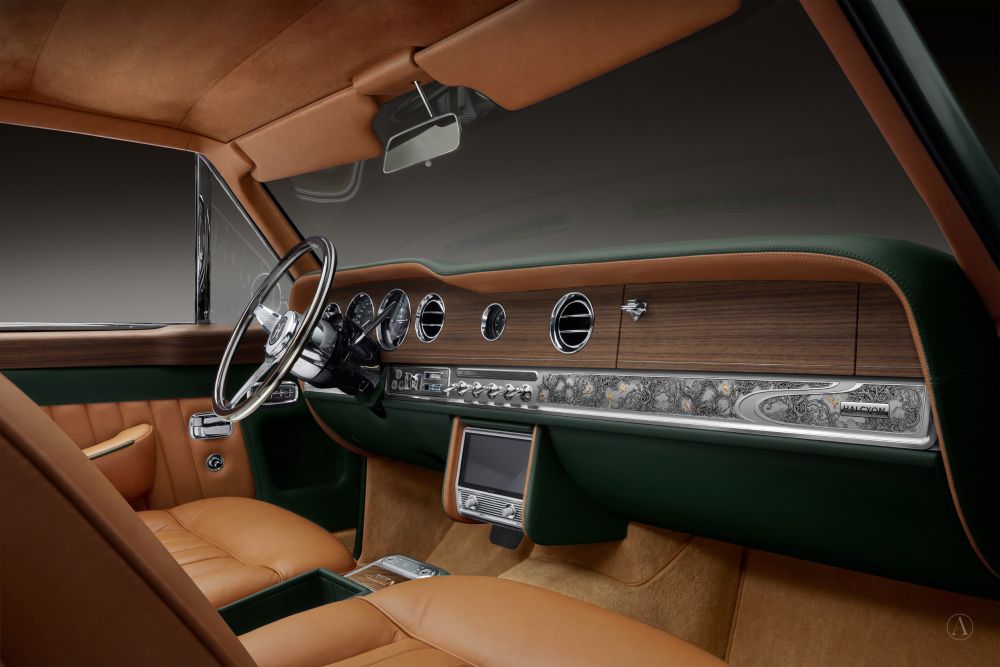
While the ‘Rose and Scroll’ design study is showcased on a Rolls-Royce Corniche Fixed Head Coupe, the Great Eight Series will also be available on the Corniche Drop Head Coupe, as well as the four-door Silver Shadow saloon. Furthermore, owing to the shared architecture of the era, the equivalent Bentley variants—including the Bentley Corniche and the T-Series—are fully supported.
Addressing Historical Engineering Flaws
The original suspension system, while undeniably revolutionary and effective for its specific era, relied heavily on an automatic self-levelling system and early iterations of independent rear suspension mounted on massive, heavy subframes.
Furthermore, the original hydropneumatic setup, while exceptionally soft and isolating in a straight line, exhibited significant body roll during cornering and a famously vague, disconnected steering feel. The high-pressure hydraulic system also required specialised maintenance, with complex height control valves and restrictor valves prone to eventual failure over decades of use.
Halcyon directly mitigates these historical shortcomings through an adaptive suspension system featuring continuously controlled electronic dampers. Halcyon claims this modern architecture transforms the vehicle’s driving dynamics, aiming to provide modern control whilst preserving the signature Rolls-Royce “waftability” that buyers demand.
Complementing this adaptive suspension is a heavily upgraded and re-engineered braking system. The notoriously complex and difficult-to-bleed original dual-circuit hydraulics are replaced with modern, high-performance braking components that bring braking performance in line with modern expectations.
Pricing and Availability
Halcyon’s remastering services for the 60 Great Eight Series start from £425,000, plus the donor vehicle and local taxes. For clients who do not already own a donor car, Halcyon offers an acquisition service to source a suitable vehicle. Halcyon’s remastering service is available for the Rolls-Royce Corniche in Drop Head and Fixed Head form, the Silver Shadow, Bentley T-Series, and Bentley Corniche. Commissions are open now, and the individual model availability is as follows:
- Rolls-Royce and Bentley Corniche Drop Head Coupe – 30 commissions
- Rolls-Royce and Bentley Corniche Fixed Head Coupe – 20 commissions
- Rolls-Royce Silver Shadow & Bentley T-Series – 10 commissions
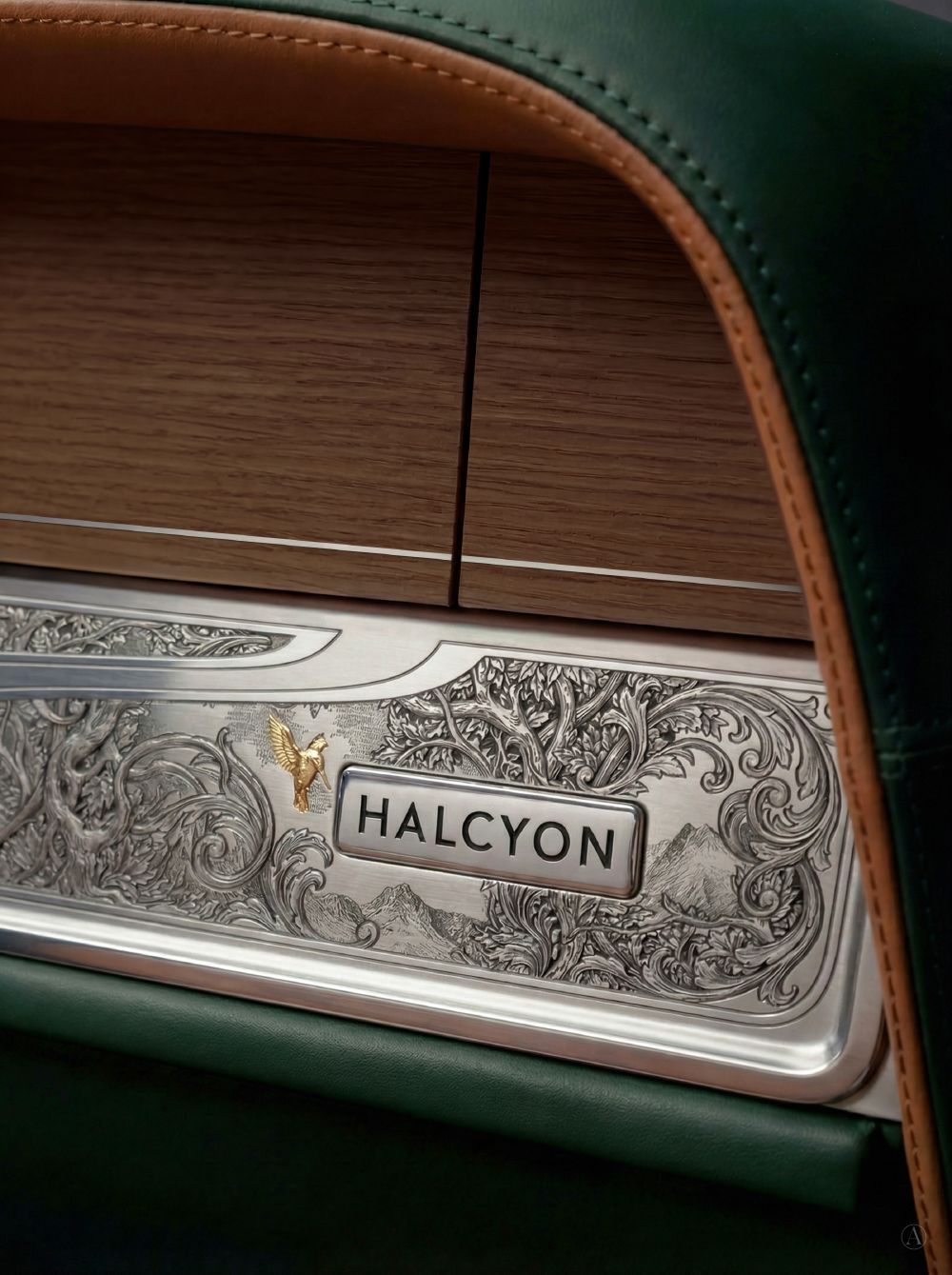
Restomods inevitably raise a question about how far a car can be altered before it becomes something else entirely. The sound, the response, the power delivery—they are all things that change when you replace the engine. Retaining but modernising the 6.75-litre engine feels like a deliberate response to that exact point; Halcyon has chosen preserving character over complete reinvention. However, this is clearly more than a plain restoration. The Halcyon Great Eight Series is an exciting direction for not only the brand, but for British analogue luxury.
| Photography: | Provided to The Analogue Collective for reporting purposes by Halcyon Cars |
| Ethics: | No brand affiliation and not a sponsored article. Opinions are our own. |